
Product Design · VR · Healthcare
VR Life Support Training
An immersive VR training platform for ECMO therapy -- one of medicine's highest-risk life support procedures. Designed to give critical care teams a realistic, repeatable simulation environment where they can build the procedural competence and team coordination that high-acuity scenarios demand.

The Challenge
ECMO therapy is one of the most complex and high-risk procedures in critical care -- a multi-step circuit requiring precise, coordinated action under extreme pressure. Teams need extensive, repetitive training, but traditional simulation lacks the procedural fidelity and repeatability to build real competence. The challenge: design an immersive VR experience that replicates ECMO workflows with enough clinical accuracy to change how teams prepare.
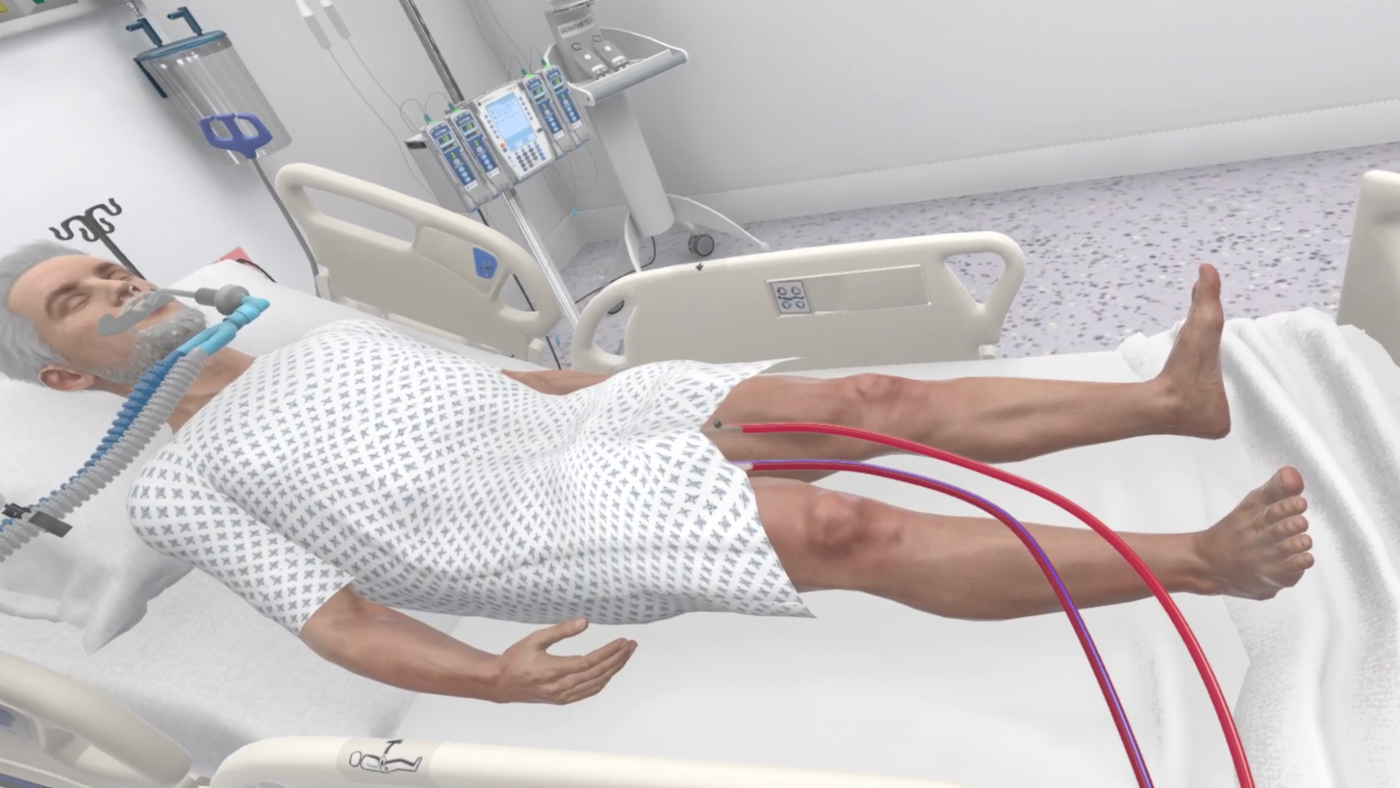
Research & Contextual Inquiry
Conducted contextual research with ECMO specialists, perfusionists, and ICU nurses -- observing and mapping the full procedure from circuit priming to patient connection. Field sessions in active critical care environments surfaced the specific decision points, team coordination breakdowns, and procedural failure modes that the simulation needed to replicate. That clinical depth became the foundation for every design decision in the VR environment.
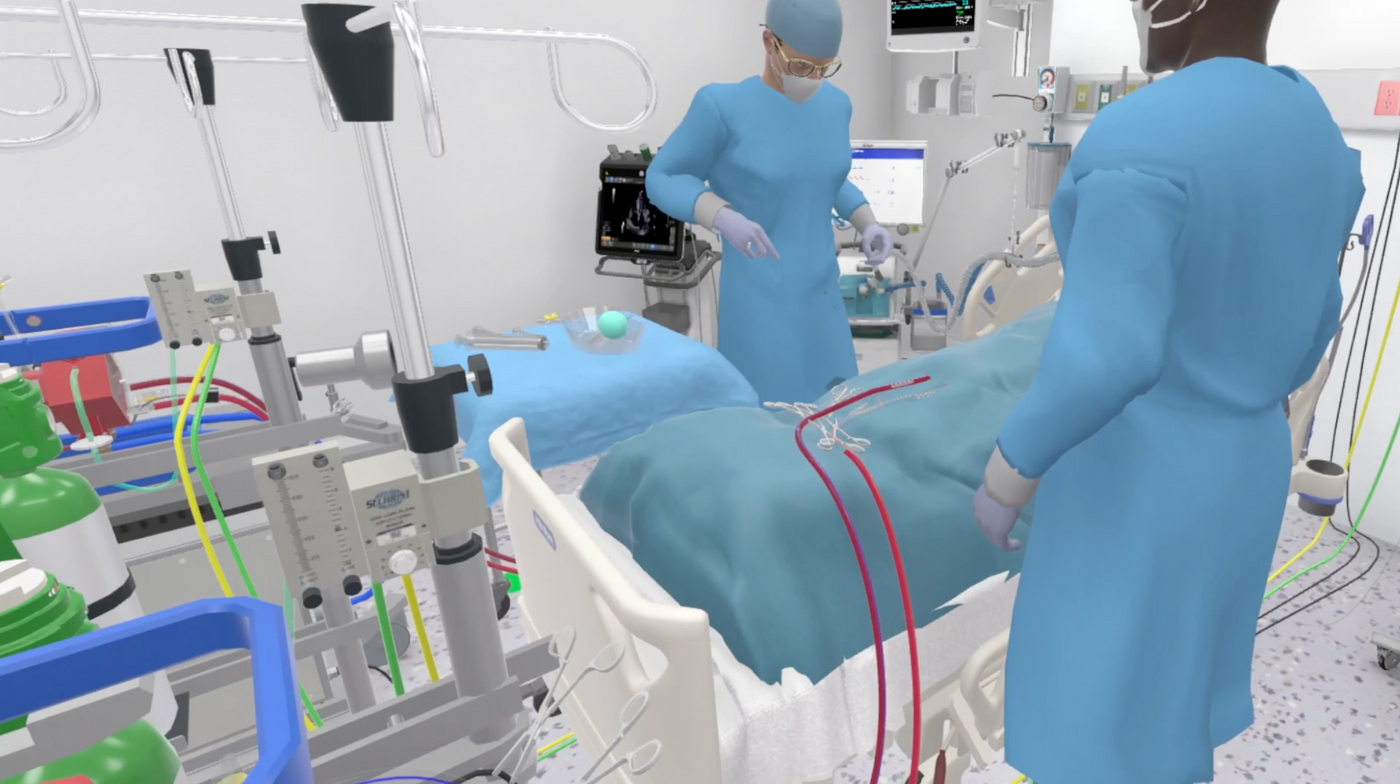
Spatial UX & Interaction Design
Led human-centered design across the full VR experience -- information architecture for in-headset UI, spatial interaction design, step-by-step procedural flows, and real-time feedback systems. Worked cross-functionally with Unity engineers and clinical advisors to translate ECMO protocols into intuitive VR interactions that preserved procedural accuracy while remaining learnable under pressure. Every interface decision was validated against the actual clinical workflow observed during research.
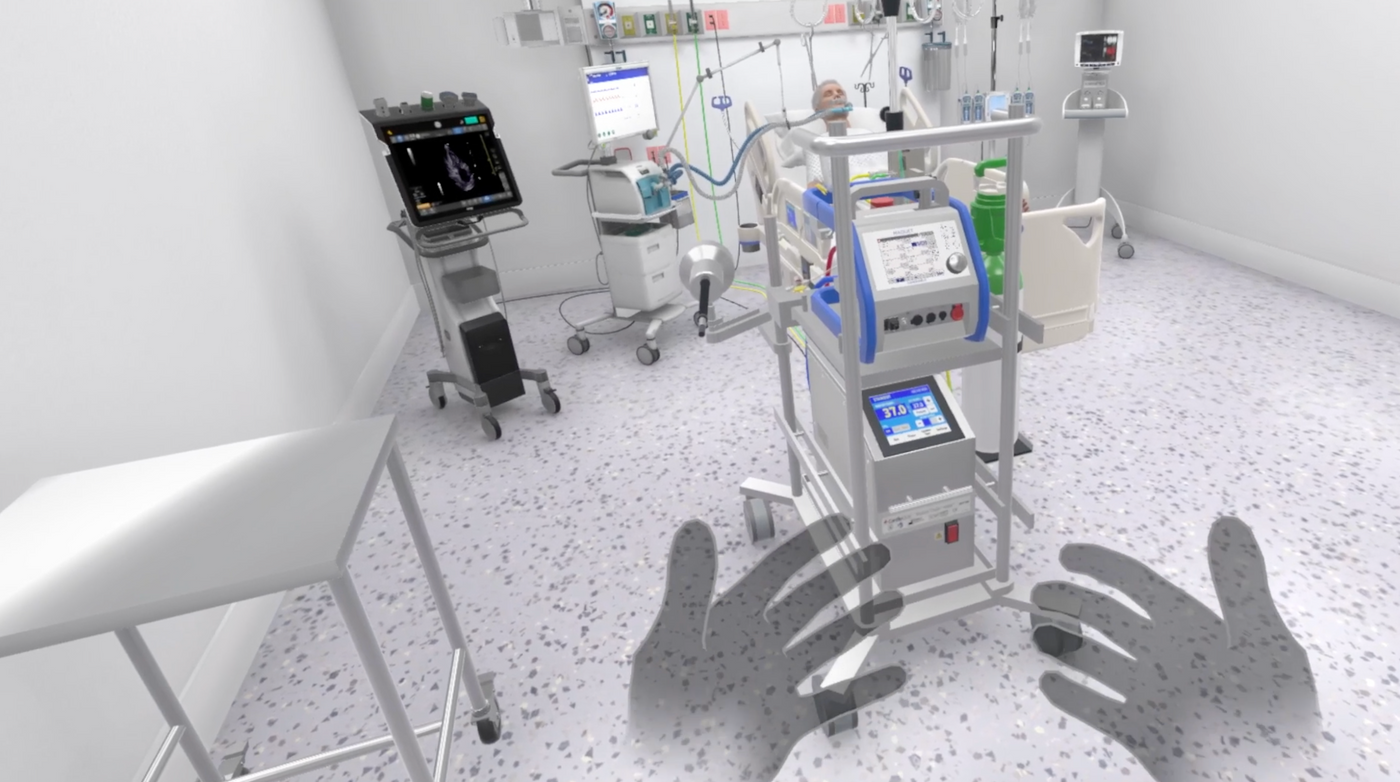
Outcome
A fully immersive VR training platform giving critical care teams a realistic, repeatable environment to rehearse ECMO procedures without risk to patients. The simulation models the complete workflow with enough procedural fidelity to surface and address the exact failure modes that matter in real clinical settings -- building the team competence and procedural confidence that high-acuity critical care demands.