Industrial Design · Medical Device
BioVigil
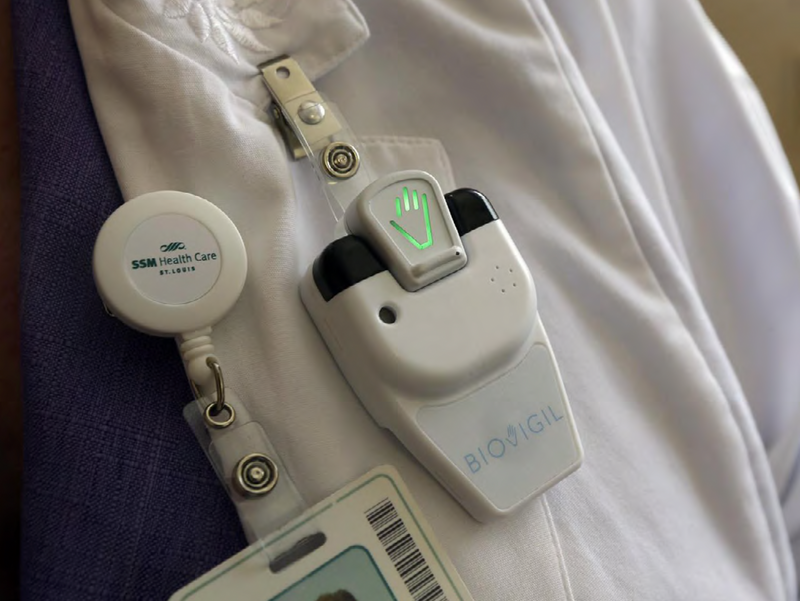
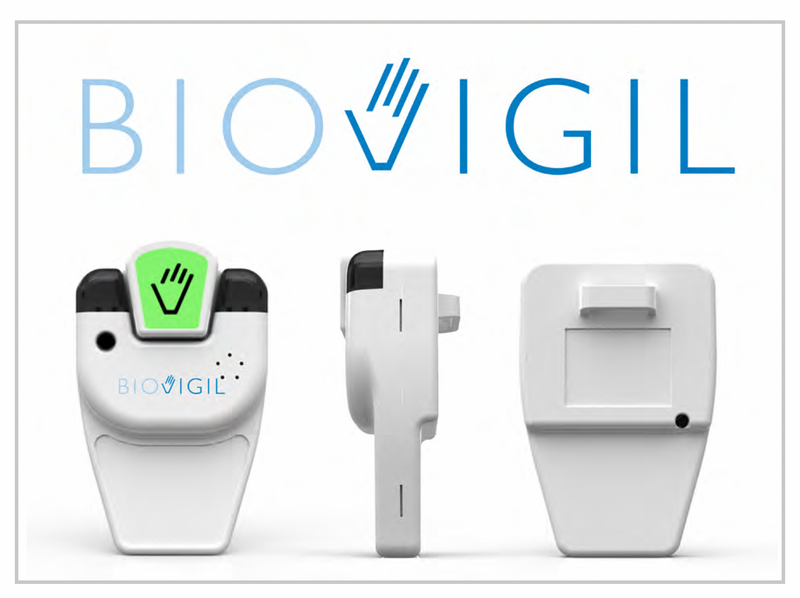
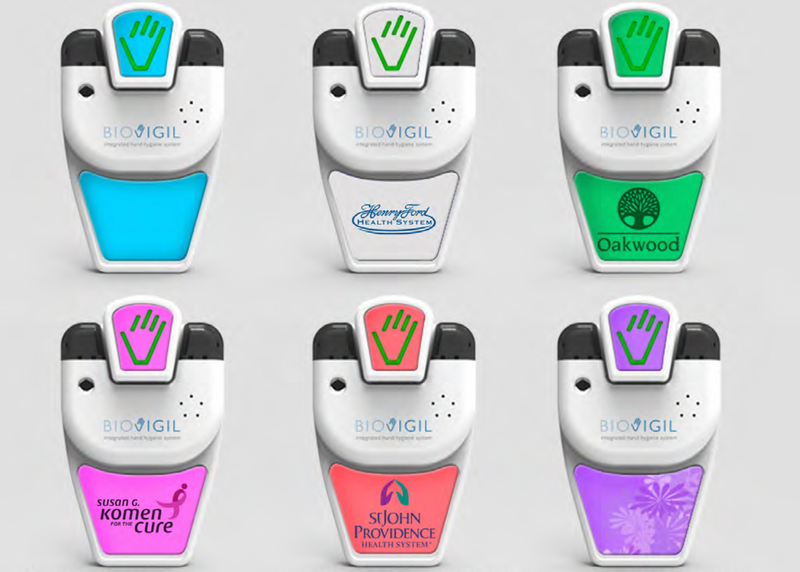
Redesigned the enclosure of a wearable hand hygiene compliance badge for a local startup preparing their next production run — solving a wearability problem by rethinking the form factor around existing hardware, from sketch to Rhino CAD.

The Challenge
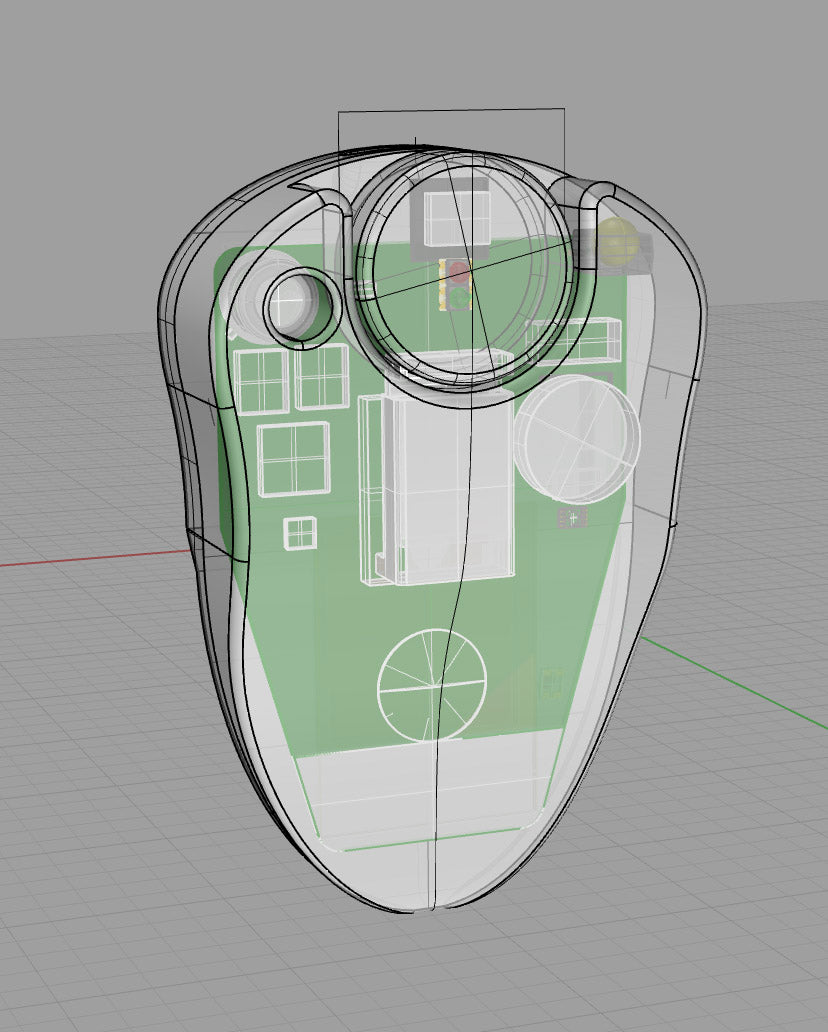
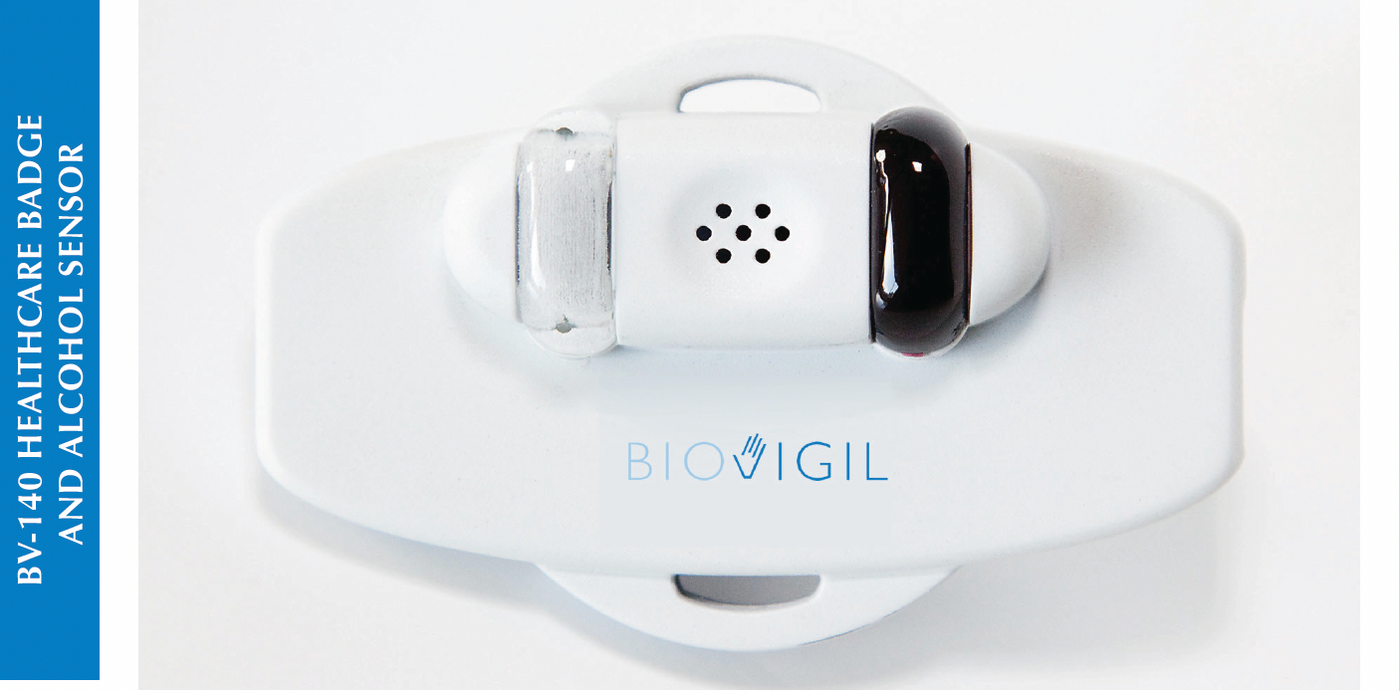
BioVigil had a working prototype of their wearable hand hygiene compliance badge, but clinical feedback was consistent: the device was too wide and bulky for nurses to wear comfortably during a shift. With a next production run on the horizon, the goal was to redesign the enclosure without touching the validated PCB or internal components — finding a slimmer form within the same hardware constraints.
Form Exploration
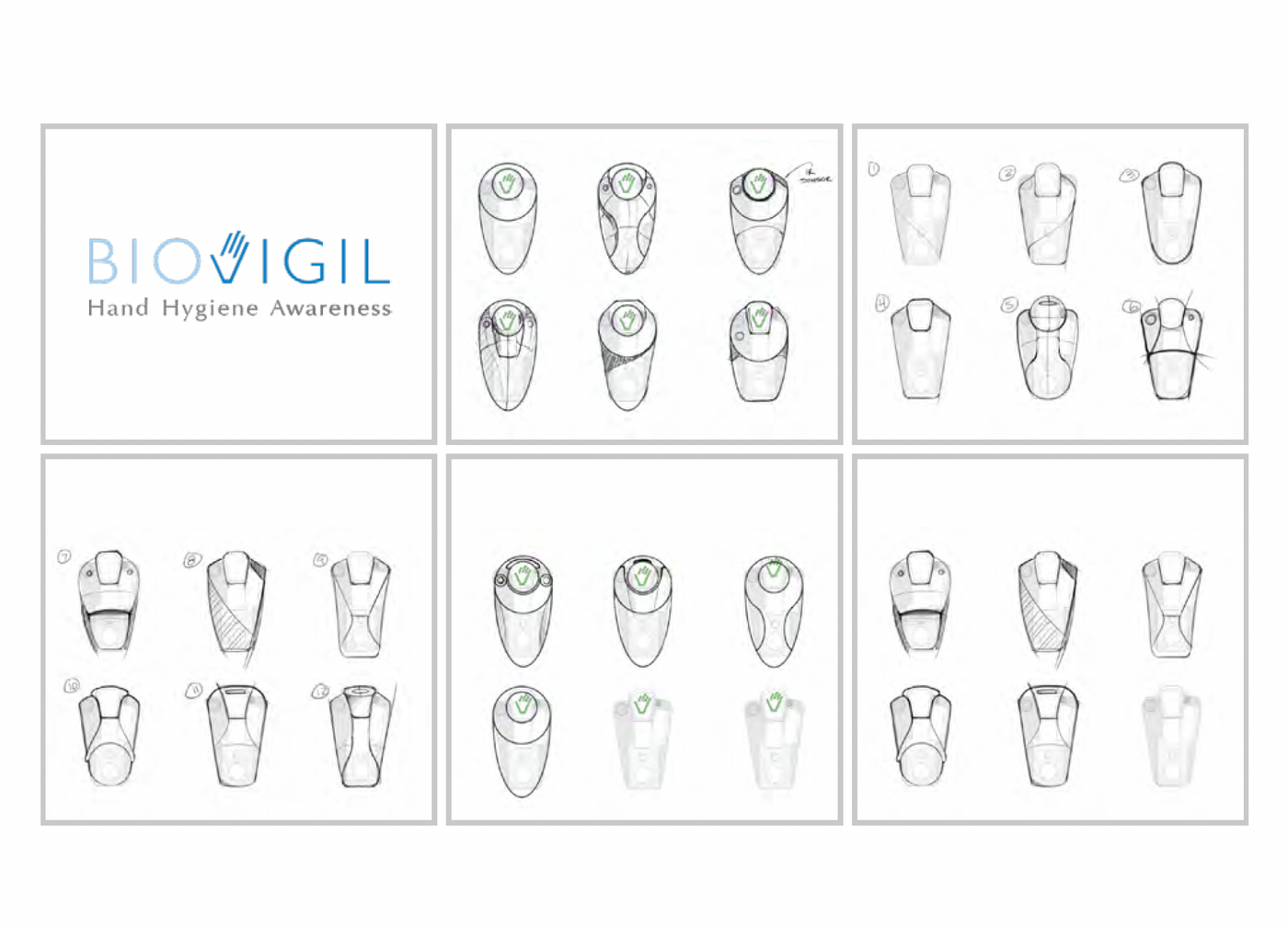
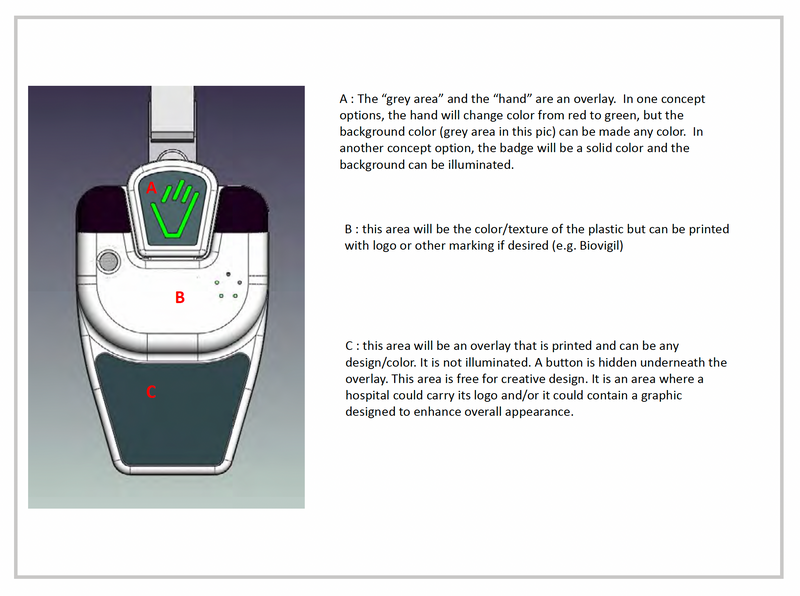
With the gen-1 circuit board as a fixed constraint, ideation focused on reorienting the layout to produce a taller, narrower profile. Sketch explorations worked around the existing components — indicator lights, battery, and sensor — to find a geometry that improved wearability without requiring any hardware changes.
CAD Development
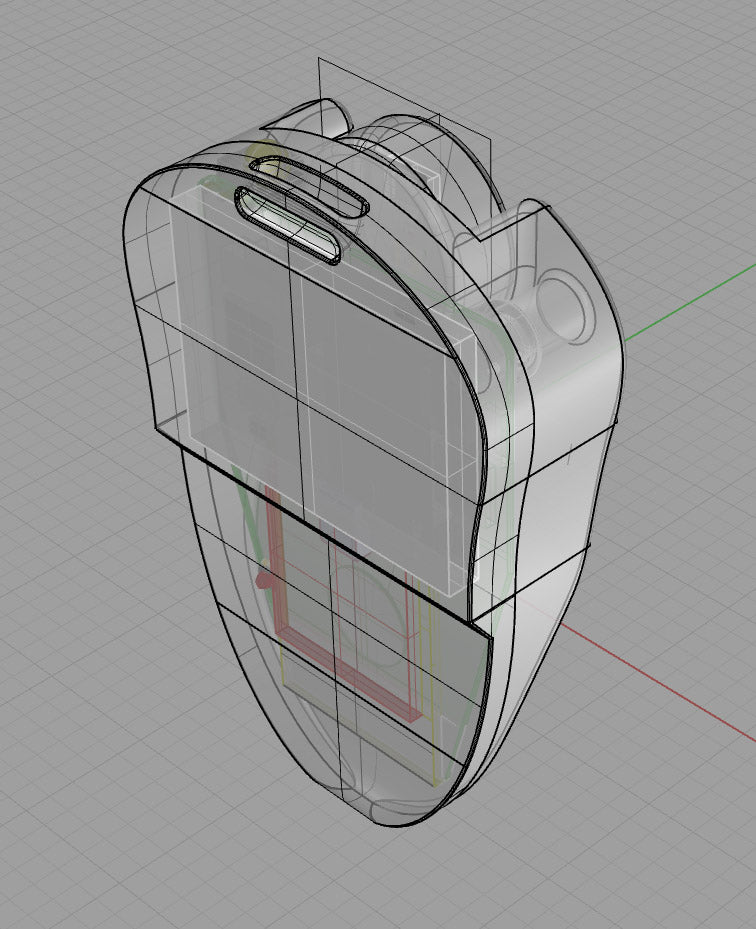
The refined direction was modeled in Rhino to produce production-ready geometry. The enclosure was designed with injection molding in mind — wall thicknesses, draft angles, and parting lines — while maintaining the precise internal clearances needed to house the original hardware.
Outcome
A slimmer, more wearable enclosure ready for BioVigil's next production run — with the original hardware fully intact. The redesigned form addressed the primary feedback from clinical staff and gave the startup a manufacturable path forward without a hardware revision.